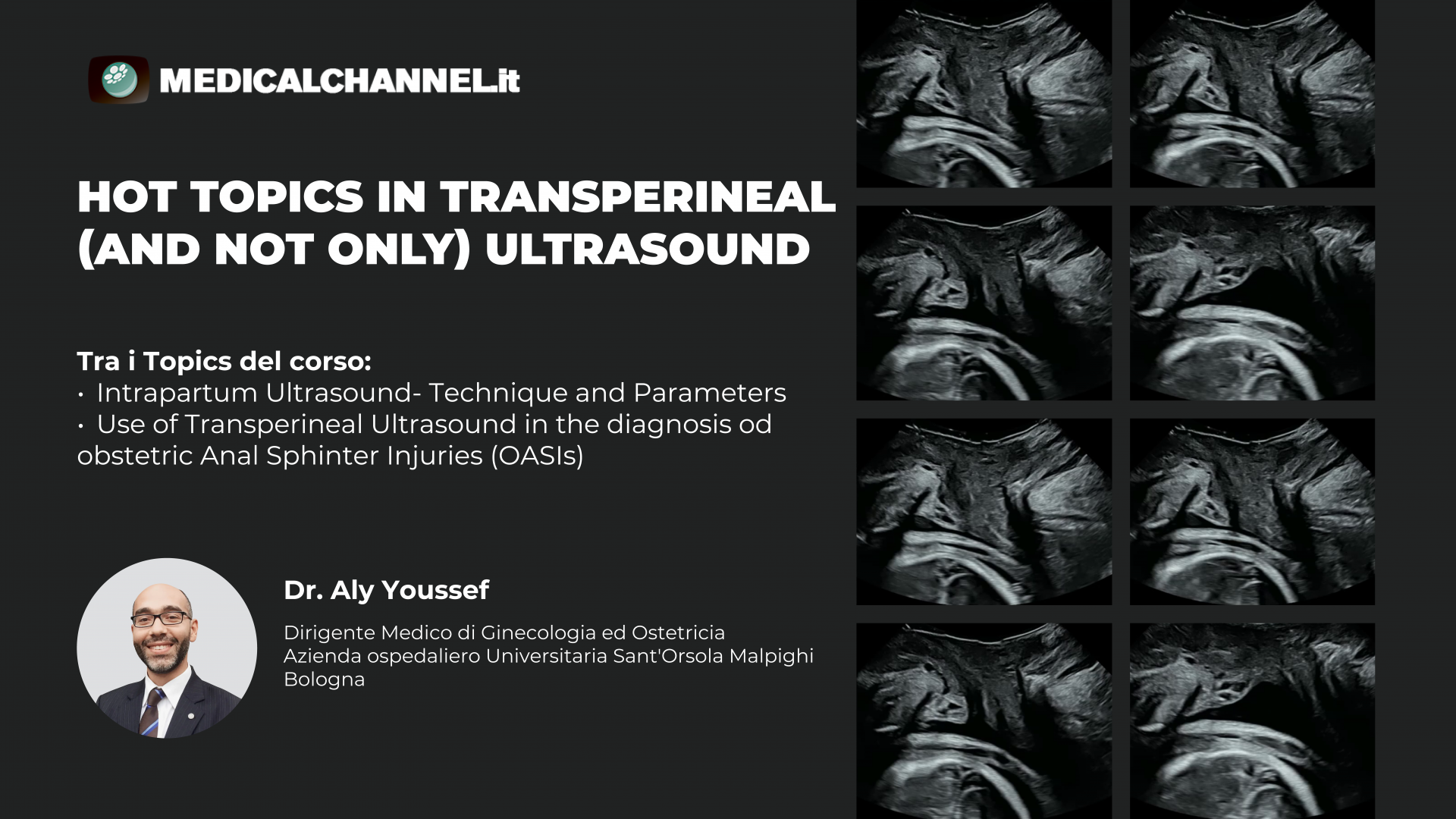
Hot Topics in Transperineal (and not only) Ultrasound
Transperineal ultrasound represents a key innovation in obstetrics and gynecology, offering a non-invasive, reproducible approach to labor ward management and pelvic health assessment. In the intrapartum setting, ultrasound evaluation of fetal head position, progression, and station brings objectivity to clinical examination, providing crucial decision support during labor monitoring and guiding operative vaginal delivery to safeguard maternal-fetal outcomes.
Similarly, 3D/4D ultrasound proves invaluable for the early diagnosis of birth trauma, including injuries to the levator ani muscle and the anal sphincter complex (OASIS). Moving from fundamental technical principles to advanced clinical applications, this course aims to bridge the gap between scientific evidence and routine practice, equipping specialists with the skills needed to prevent long-term complications and improve patient quality of life.Transperineal ultrasound represents a key innovation in obstetrics and gynecology, offering a non-invasive, reproducible approach to labor ward management and pelvic health assessment. In the intrapartum setting, ultrasound evaluation of fetal head position, progression, and station brings objectivity to clinical examination, providing crucial decision support during labor monitoring and guiding operative vaginal delivery to safeguard maternal-fetal outcomes.
Similarly, 3D/4D ultrasound proves invaluable for the early diagnosis of birth trauma, including injuries to the levator ani muscle and the anal sphincter complex (OASIS). Moving from fundamental technical principles to advanced clinical applications, this course aims to bridge the gap between scientific evidence and routine practice, equipping specialists with the skills needed to prevent long-term complications and improve patient quality of life.
Author of the Course: Youssef Aly

Course content
Basic Principles, Techniques and Useful Tips befor...
Intrapartum Ultrasound: Technique and Parameters
The use of Ultrasound before Operative Delivery: a...
€9.99
The use of Transperineal Ultrasound in the Diagnos...
€9.99
The use of Transperineal Ultrasound in the diagnos...
€9.99
The last chapter: Transperineal Ultrasound as new...
€9.99
Transperineal ultrasound represents a key innovation in obstetrics and gynecology, offering a non-invasive, reproducible approach to labor ward management and pelvic health assessment. In the intrapartum setting, ultrasound evaluation of fetal head position, progression, and station brings objectivity to clinical examination, providing crucial decision support during labor monitoring and guiding operative vaginal delivery to safeguard maternal-fetal outcomes.
Similarly, 3D/4D ultrasound proves invaluable for the early diagnosis of birth trauma, including injuries to the levator ani muscle and the anal sphincter complex (OASIS). Moving from fundamental technical principles to advanced clinical applications, this course aims to bridge the gap between scientific evidence and routine practice, equipping specialists with the skills needed to prevent long-term complications and improve patient quality of life.Transperineal ultrasound represents a key innovation in obstetrics and gynecology, offering a non-invasive, reproducible approach to labor ward management and pelvic health assessment. In the intrapartum setting, ultrasound evaluation of fetal head position, progression, and station brings objectivity to clinical examination, providing crucial decision support during labor monitoring and guiding operative vaginal delivery to safeguard maternal-fetal outcomes.
Similarly, 3D/4D ultrasound proves invaluable for the early diagnosis of birth trauma, including injuries to the levator ani muscle and the anal sphincter complex (OASIS). Moving from fundamental technical principles to advanced clinical applications, this course aims to bridge the gap between scientific evidence and routine practice, equipping specialists with the skills needed to prevent long-term complications and improve patient quality of life.
Lesson coming soon


Scientific Rationale
Transperineal ultrasound represents a key innovation in obstetrics and gynecology, offering a non-invasive, reproducible approach to labor ward management and pelvic health assessment. In the intrapartum setting, ultrasound evaluation of fetal head position, progression, and station brings objectivity to clinical examination, providing crucial decision support during labor monitoring and guiding operative vaginal delivery to safeguard maternal-fetal outcomes.
Similarly, 3D/4D ultrasound proves invaluable for the early diagnosis of birth trauma, including injuries to the levator ani muscle and the anal sphincter complex (OASIS). Moving from fundamental technical principles to advanced clinical applications, this course aims to bridge the gap between scientific evidence and routine practice, equipping specialists with the skills needed to prevent long-term complications and improve patient quality of life.Transperineal ultrasound represents a key innovation in obstetrics and gynecology, offering a non-invasive, reproducible approach to labor ward management and pelvic health assessment. In the intrapartum setting, ultrasound evaluation of fetal head position, progression, and station brings objectivity to clinical examination, providing crucial decision support during labor monitoring and guiding operative vaginal delivery to safeguard maternal-fetal outcomes.
Similarly, 3D/4D ultrasound proves invaluable for the early diagnosis of birth trauma, including injuries to the levator ani muscle and the anal sphincter complex (OASIS). Moving from fundamental technical principles to advanced clinical applications, this course aims to bridge the gap between scientific evidence and routine practice, equipping specialists with the skills needed to prevent long-term complications and improve patient quality of life.
Supported by: